When Protection Becomes Possible
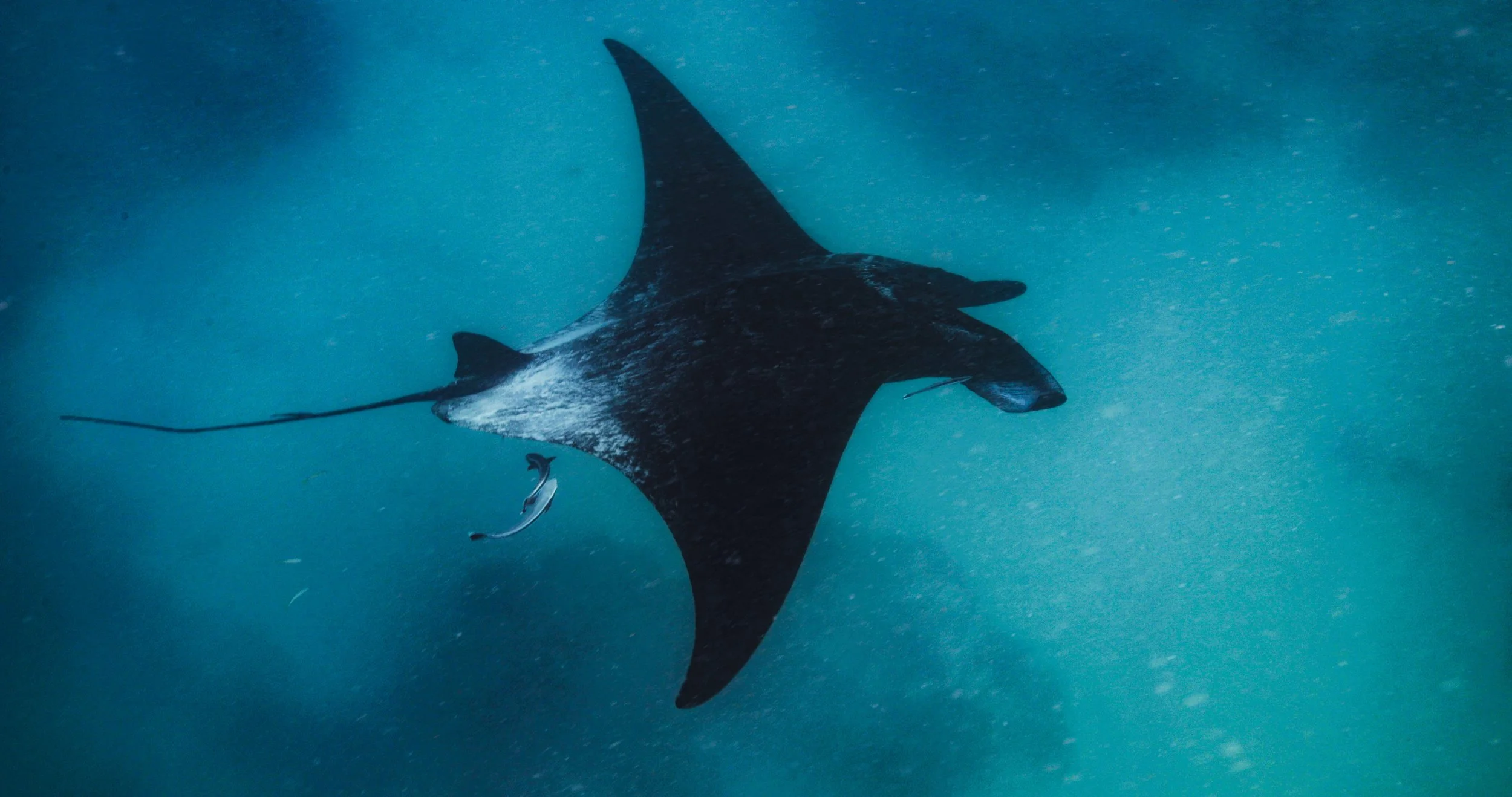
Coral Bay | Image: In the Wake of Giants
A Global Decision Felt Deeply in the Places We Film
On 28 November 2025, every manta and devil ray species on Earth was officially uplisted to CITES Appendix I, an action reserved for those at risk of irreversible decline.
What happened in a conference hall on the other side of the world is already reaching the bays, channels and open blue water we have come to know intimately. It matters in the Coral Triangle. It matters in Nyinggulu. It matters wherever migration routes and feeding grounds still hold enough quiet for rays to pass through unbothered.
It matters because these are not abstract species in our footage. They are constant presences. They are the shadows that move beneath us when tide and sunlight settle into stillness. They are the reason awe remains part of this work.
BEYOND TRADE, TOWARDS RELATIONSHIP
Manta and devil rays have always been part of the story we are telling. They do not rush. They arrive with intention, with grace, with a rhythm that is entirely their own. Their biology has never aligned with extraction or speed. One pup. Years in between. Lifetimes before maturity.
This is why Appendix I feels like a pause that honours what they are, not what they can provide. It reminds us that the ocean is not simply a resource, and that choosing restraint is sometimes the most restorative form of protection.
A DECISION THAT ECHOES UNDERWATER
What stands out most about this global vote is not the legal language, but what it reflects. A change in how we see the sea and those who inhabit it.
It is not that mantas and devil rays have suddenly gained worth. It is that their worth has finally been recognised in a way that respects their vulnerability.
Researchers, conservation advocates, coastal communities, divers and those who move across the surface with reverence all felt the magnitude of this moment. The collective voice held weight.
The shift is symbolic, yet symbols shape how we move forward. They influence policy, but they also influence perception.
A MOMENT OF ALIGNMENT
For us, spending time in waters where megafauna migrate with quiet certainty, this news does not feel like paperwork. It feels like breath.
The story we are telling is not one of loss. It is one of coexistence. It is the agreement to regulate rather than regret. It is the willingness to uplift rather than exploit. It is the simple but profound act of recognising the ocean not for what it gives, but for what it is.
This ruling is not finality. It is possibility. It invites us to replace reaction with intention.
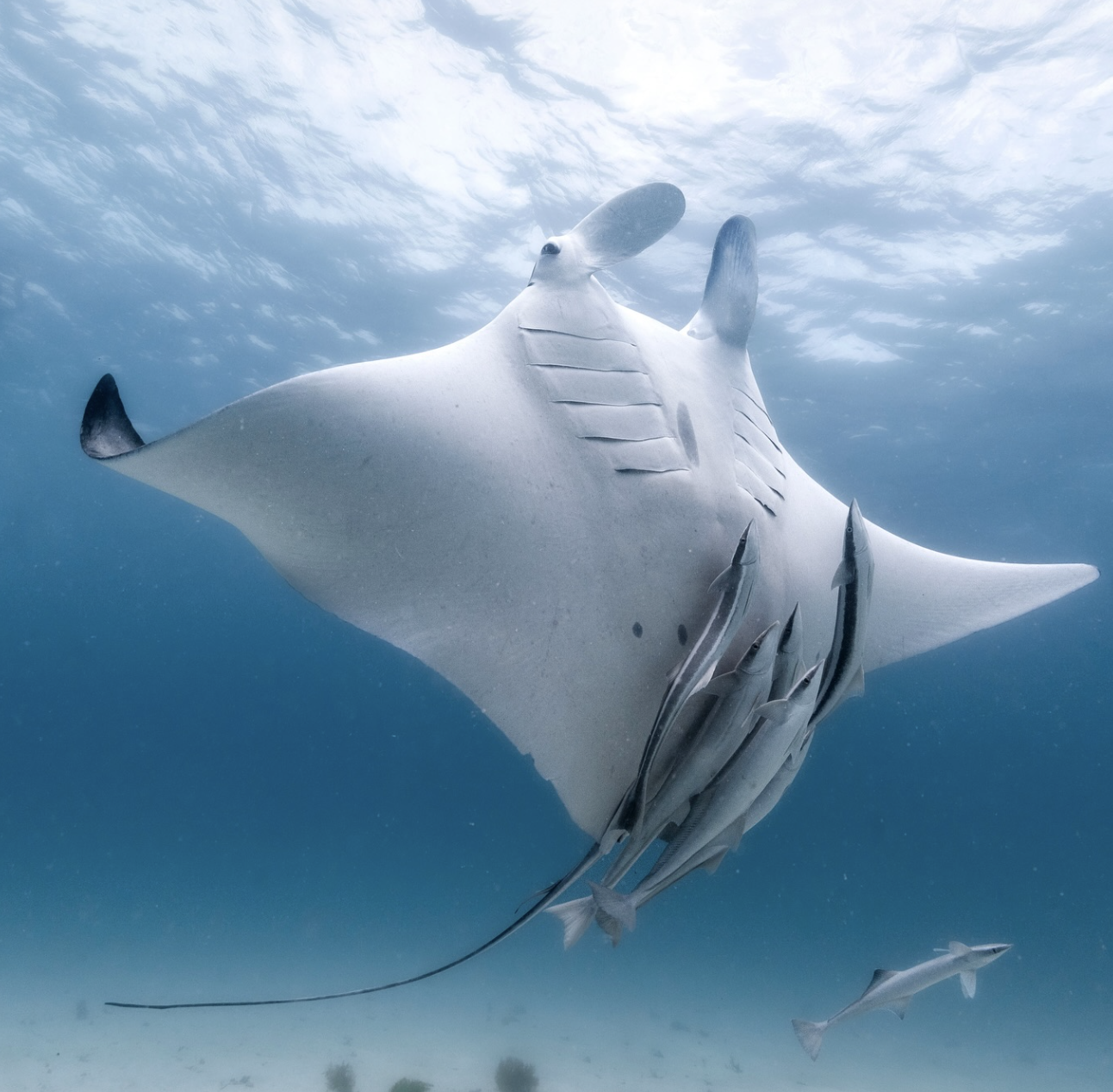
Manta | Tom Cannon
What Comes Next ?
Appendix I removes international commercial trade, but recovery lives in the space where policy meets sea spray and shoreline. It will rely on governments, ports, fishers, tourism operators, educators and travellers.
If regulation remains distant, protection remains symbolic. If stewardship meets enforcement, manta and devil rays have more than survival. They have room to thrive.
WHY WE FEEL HOPE
Because we have seen what happens when people choose to meet the ocean as kin rather than commodity.
Because we have witnessed the quiet recognition in the eyes of those who encounter a manta for the first time and understand that its existence carries value beyond measure.
Because we have been in the water when a shadow becomes a presence that changes something essential inside you.
Hope is not naïve. It is a steady choice to believe that the ocean can heal if we allow it to.